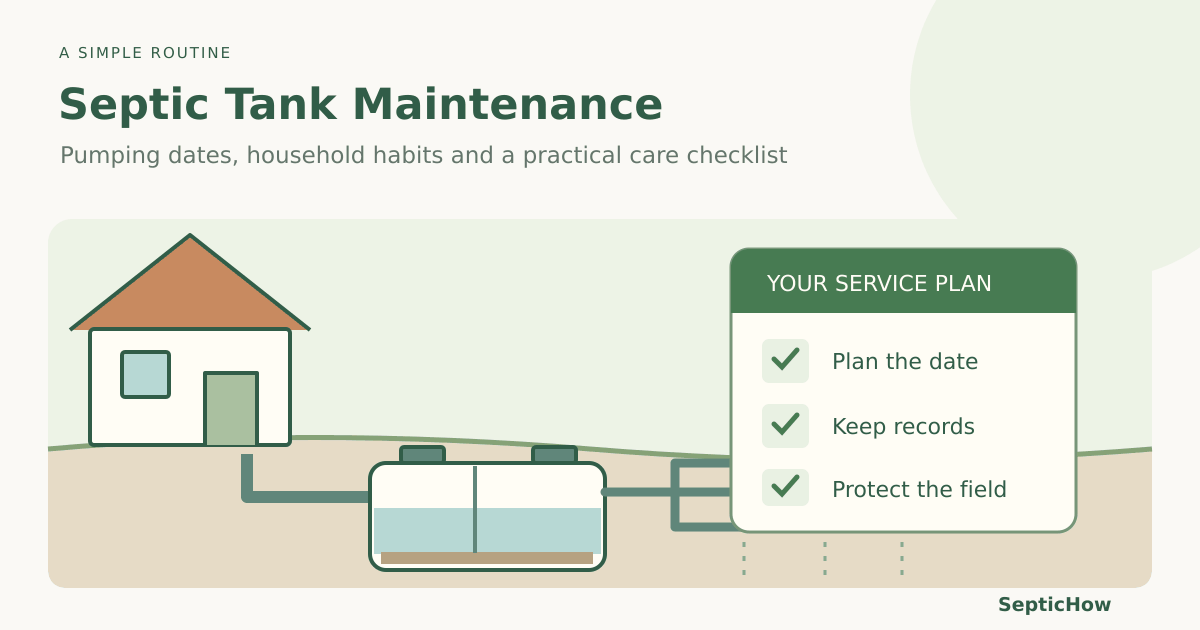
A useful septic plan combines professional inspections, pumping based on measured solids and local requirements, mindful water use, and drain-field protection. Never wait for sewage to back up before arranging service.
How often should you pump a septic tank? (Estimate and inspect)
The EPA generally recommends professional septic system inspections every 1 to 3 years and pumping every 3 to 5 years. Actual pumping need depends on tank capacity, household size, water use, solids accumulation, and local rules. A professional can measure sludge and scum and advise whether to pump sooner.
This historical EPA technical table gives suggested intervals by tank capacity and household size. Its source data date to 1991; use the values only as a rough planning comparison, not as a current EPA schedule, legal requirement, or reason to delay inspection.
The table has no garbage-disposal multiplier. Food waste can increase solids loading, but a fixed interval reduction is not an EPA or Penn State rule. The calculator’s optional 30% shorter interval is a separately labeled SepticHow planning heuristic. Follow measured inspection results and local requirements.
| Tank size | 2 people | 4 people | 6 people | 8 people | 10 people |
|---|---|---|---|---|---|
| 500 gal | 2.6 yr | 1.0 yr | 0.4 yr | 0.2 yr | — |
| 750 gal | 4.2 yr | 1.8 yr | 1.0 yr | 0.6 yr | 0.3 yr |
| 1,000 gal | 5.9 yr | 2.6 yr | 1.5 yr | 1.0 yr | 0.7 yr |
| 1,250 gal | 7.5 yr | 3.4 yr | 2.0 yr | 1.4 yr | 1.0 yr |
| 1,500 gal | 9.1 yr | 4.2 yr | 2.6 yr | 1.8 yr | 1.3 yr |
| 2,000 gal | 12.4 yr | 5.9 yr | 3.7 yr | 2.6 yr | 2.0 yr |
| 2,500 gal | 15.6 yr | 7.5 yr | 4.8 yr | 4.0 yr | 2.6 yr |
EPA 'Pump-Now' solids measurement thresholds
A licensed septic inspector does not guess when to pump based on a calendar date alone. Instead, they use specialized measuring tools (such as a 'Sludge Judge') to physically measure solid layers inside the tank. According to EPA and university extension standards, pump your tank immediately if:
• The bottom of the floating scum layer is within 6 inches of the bottom of the outlet baffle or tee.
• The top of the settled sludge layer is within 12 inches of the bottom of the outlet device.
• The combined thickness of sludge and scum exceeds 25% to 33% of the total liquid operating depth.
If an inspection reveals solids exceeding these thresholds, waiting for a calendar reminder risks sending solids into the drain field, which can cause thousands of dollars in permanent soil damage.
The homeowner's practical septic maintenance checklist
Follow this structured maintenance routine to protect your system from premature failure:
| Cadence | Homeowner task | What to verify & record |
|---|---|---|
| Everyday | Practice strict flushing discipline | Toilets: human waste and toilet paper only; zero wipes |
| Weekly | Spread out laundry wash loads | Wash 1 load per day rather than 5 loads on one weekend day |
| Monthly | Inspect plumbing for silent leaks | Check toilet flappers and faucets; verify drain field has no spongy spots |
| Every 6–12 months | Effluent filter inspection & cleaning | Have technician service filter during routine check or follow certified safety protocol |
| Every 1–3 years | Professional septic inspection | Measure sludge/scum; inspect baffles, pump, floats, and D-box |
| Every 3–5 years | Complete tank pump-out | Retain disposal manifest, gallons pumped, and condition notes |
What can you flush with a septic tank? The golden rules
A septic tank is a biological ecosystem. Beneficial bacteria digest organic human waste, but synthetic materials, non-biodegradable items, and harsh chemicals do not break down and quickly fill the tank or clog the drain field.
Post these simple rules for family members and guests:
- NEVER flush wipes: 'Flushable' wipes do NOT disintegrate in septic tanks. They form dense synthetic mats that jam pumps and clog filters.
- Keep trash out: Paper towels, facial tissues, feminine hygiene products, cotton swabs, condoms, dental floss, diapers, and cigarette butts belong in the trash can.
- Never pour cooking grease down the sink: Fats, oils, and grease (FOG) solidify in the tank, expand the scum layer, and can wash into the drain field.
- Avoid excessive harsh cleaners: Concentrated bleach, chemical drain openers, paint thinners, and antibacterial soaps kill beneficial bacteria.
Water efficiency, laundry habits, and hydraulic overload
Hydraulic overload occurs when excessive water rushes through the tank too quickly. When this happens, wastewater does not remain in the tank long enough for solids to settle by gravity. Unsettled solids wash straight out the outlet into the drain field, sealing soil pores.
Install low-flow showerheads and dual-flush toilets, spread laundry across the week, and immediately replace leaking toilet flappers, which can silently waste 200 gallons of water per day.
How to protect your septic drain field
The drain field is the most expensive component of your septic system to replace ($5,000 to $20,000+). Protect it with these strict rules:
• Never drive or park vehicles, trailers, RVs, or construction equipment over the drain field or reserved replacement area. Heavy weight crushes PVC pipes and compacts soil.
• Plant only lawn grass over the field. Avoid trees and deep-rooted shrubs within 30 feet, as roots penetrate perforations and shatter pipes.
• Divert all surface drainage: Ensure roof gutter downspouts, sump pump discharge, and driveway runoff flow completely away from the drain field to prevent waterlogging.
Effluent filter maintenance & professional service
If your septic tank was installed or updated in the last 20 years, it likely contains an effluent filter inside the outlet tee. This cylindrical slotted cartridge catches hair, lint, and suspended solids before they can migrate out to the drain field.
Effluent filters require routine servicing every 6 to 12 months. Because accessing the filter requires opening the tank's outlet riser—exposing you to lethal sewer gases (such as hydrogen sulfide and methane) and severe fall hazards—filter inspection and cleaning is safest when conducted by a licensed septic professional or qualified technician. The technician removes the filter, washes trapped solids back into the primary tank compartment (never onto the lawn), inspects the cartridge for damage, and reseats it securely in the outlet tee.
Building a permanent septic service record folder
Keep a dedicated physical or digital septic folder containing: the original county permit and as-built installation drawing, all pumping and inspection receipts, licensed contractor contact numbers, and notes on household occupancy changes.
Documenting a consistent maintenance history increases home resale value and gives technicians vital baseline data when diagnosing issues.
Warning signs requiring immediate emergency service
Do not wait for a calendar reminder if you observe emergency warning signs: sewage backing up into basement drains or bathtubs, gurgling plumbing across multiple rooms, foul sewage odors, spongy wet grass over the drain field, or an audible high-water alarm.
If sewage is backing up or surfacing, cut water use immediately, keep children and pets away from contaminated areas, and contact a licensed septic contractor.
Frequently asked questions
How often should a septic tank be pumped for a family of four?
EPA commonly recommends pumping every 3 to 5 years, but the exact timing depends on inspection findings, tank capacity, household use and local rules. A historical EPA table estimated about 2.6 years for four people using a 1,000-gallon tank and 4.2 years for a 1,500-gallon tank; these are rough estimates, not a schedule to follow without inspection.
Do septic tank additives eliminate the need for pumping?
No. The EPA and independent university testing confirm that commercial additives, bacteria packs, and yeast do not eliminate the need for routine pumping. Accumulated inorganic solids and mineral sludge must be physically removed.
What should I do if I don't know when the tank was last pumped?
Schedule a professional septic inspection. The technician can measure sludge and scum depth with a measuring probe to determine whether immediate pumping is required and establish a fresh service record.
Does a garbage disposal change pumping frequency?
Food waste can increase solids loading and may mean more frequent inspection or pumping. There is no universal fixed percentage or interval multiplier; ask your septic professional to base the schedule on inspection measurements and local rules.
How can I protect my drain field in the winter?
Let grass grow a bit longer in the fall to act as natural insulation, fix all plumbing leaks to prevent continuous trickle freezing, and never drive snowmobiles or vehicles over the field.
Sources you can check
University of Minnesota — Septic care and maintenance ↗
Household habits and professional maintenance · Checked 2026-10-20
EPA — How to care for your septic system ↗
Maintenance and household water use · Checked 2026-10-20
EPA — Frequent questions on septic systems ↗
Records, inspections and local permitting · Checked 2026-10-20
Purdue Extension — Operating and Maintaining an Effluent Filter (HENV-105-W) ↗
Effluent filter purpose, maintenance frequency, and safety precautions · Checked 2026-10-20
Penn State Extension — Septic tank pumping ↗
Pennsylvania inspection and pumping recommendations and tank-size/occupancy estimates · Checked 2026-11-14
EPA — Suggested septic tank pumping frequency table (historical technical fact sheet) ↗
Historical suggested intervals by tank capacity and household size; cited as an estimate, not current regulation · Checked 2026-11-14