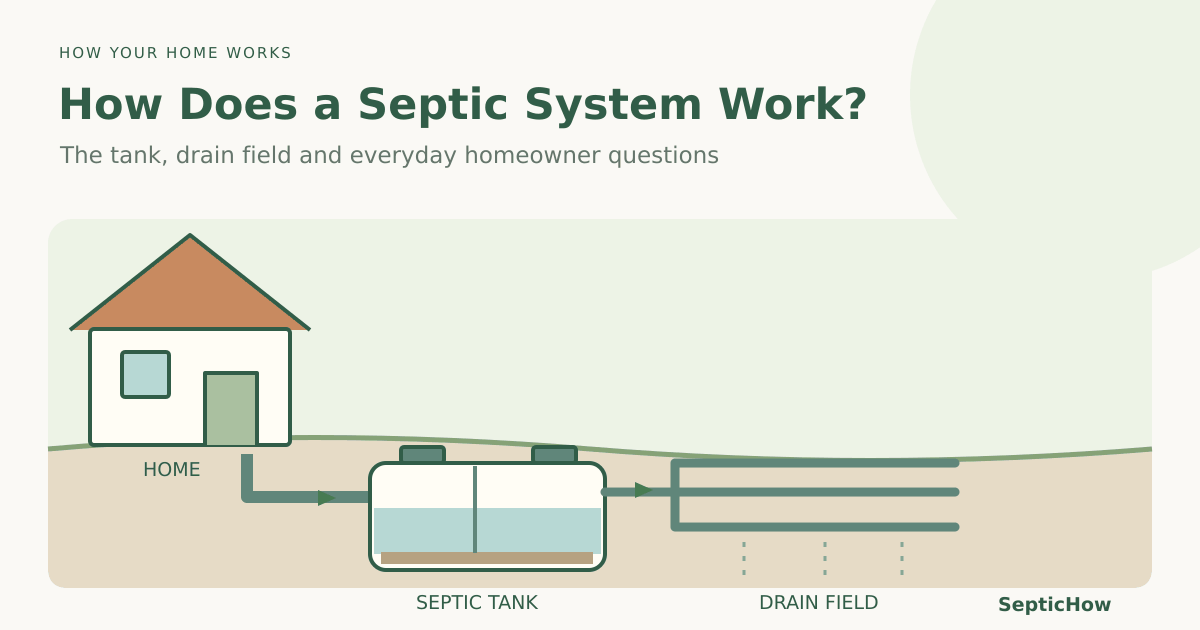
A septic system treats wastewater on your property. The tank separates solids from liquid, and the drain field handles further treatment in the soil. Pumping removes the solids that build up over time.
How does a septic system work in a house?
When you flush a toilet, run the washing machine, or take a shower, wastewater flows down your drains into a single main sewer line leading outside to your septic tank.
A conventional onsite wastewater treatment system consists of two primary components: a watertight underground septic tank and a subsurface soil absorption area (drain field). The tank separates solids from liquid, while the soil provides biological treatment before purified water re-enters the groundwater table.
What happens inside the septic tank?
Inside the tank, wastewater naturally separates by gravity into three distinct layers over a 24- to 48-hour settling period:
• Sludge (Bottom layer): Heavy solid particles, human waste, and organic matter settle to the floor of the tank. Anaerobic bacteria digest some solids, but the remaining sludge must be pumped out periodically.
• Scum (Top layer): Fats, oils, grease, and floating soap suds float to the surface, creating an airtight blanket that supports anaerobic bacterial breakdown.
• Clarified Effluent (Middle layer): The relatively clear liquid between the scum and sludge layers exits the tank through the outlet tee and flows to the drain field.
Septic system parts explained in plain English
Understanding your system layout helps you communicate clearly with service technicians and avoid costly landscaping mistakes:
| Component | Plain-English function | Homeowner maintenance task |
|---|---|---|
| House Sewer Pipe | Transports wastewater from home to tank | Keep non-flushables and grease out |
| Septic Tank | Separates sludge, scum, and effluent | Pump every 3 to 5 years |
| Inlet & Outlet Baffles | Prevents floating scum from blocking pipes | Inspect during every pumping service |
| Effluent Filter | Screens fine solids before liquid leaves tank | Have service provider inspect and clean during routine service |
| Risers & Secured Lids | Provides ground-level service access | Keep securely bolted and unobstructed; do not open yourself |
| Distribution Box (D-Box) | Distributes effluent evenly to trenches | Verify level flow during inspections |
| Drain Field Trenches | Perforated pipes in gravel or chambers | Protect from vehicles and tree roots |
What is a septic drain field or leach field?
The drain field receives liquid effluent from the septic tank. In a conventional system, effluent trickles through perforated pipes into gravel trenches or plastic chambers and percolates downward into natural soil.
Soil microbes, oxygen, and soil particles filter out harmful bacteria, viruses, and excessive nutrients before the purified water rejoins the groundwater table.
How to locate your underground septic tank and drain field
Many new homeowners have never seen their septic tank or drain field because all components are buried beneath lawn or mulch. Locating your system is essential before landscaping, building a fence, or scheduling service:
• Obtain your county as-built diagram: Visit or contact your county environmental health department. Most jurisdictions maintain the original installation permit and site sketch showing exact distances from the foundation, well, and property lines.
• Trace the main plumbing exit: Head down to your basement or crawl space to identify where the 3- to 4-inch main sewer pipe exits through the foundation wall. The septic tank is usually located 10 to 25 feet straight out from that exit point.
• Look for ground clues: Look for slight depressions in the lawn, circular green grass rings, or green plastic or concrete riser lids flush with the lawn. During dry summer months, grass directly over the drain field trenches often stays greener than the rest of the lawn.
• Use a soil probe rod: A professional contractor uses an insulated T-handle soil probe to gently tap into the soil until feeling the solid concrete or fiberglass lid roughly 12 to 36 inches deep.
Buying a house with a septic system: Essential rules
If you are purchasing a home with an onsite septic system, treat the septic system with the same scrutiny you would give the roof or foundation:
• Never rely solely on a standard home inspection: General home inspectors typically only run water and confirm fixtures drain. Hire a licensed septic technician to open the lids, inspect baffles, measure sludge depths, and conduct a hydraulic flow test.
• Demand proof of recent pumping: Require the seller to provide written pumping receipts from a licensed pumper within the past 12 months, or make professional pumping a condition of the sale.
• Verify bedroom capacity matches marketing: In some listings, a home is advertised as having 4 or 5 bedrooms, but the county septic permit was only approved for a 3-bedroom design. Undersized systems are prone to early failure and costly legal complications.
Frequently asked questions
Does shower and laundry water go into the septic tank?
Yes. In standard residential systems, all household greywater (sinks, showers, laundry) and blackwater (toilets) discharge into the septic tank.
Does a septic tank empty itself?
Liquid effluent exits naturally into the drain field, but accumulated solid sludge and scum do not empty themselves and must be mechanically pumped out.
Can you pour bleach or drain cleaners down a septic system?
Normal, moderate household cleaning using diluted bleach is acceptable. However, avoid dumping concentrated chemicals, solvents, or chemical drain openers that kill beneficial tank bacteria.
Sources you can check
EPA — How septic systems work ↗
Septic tanks and soil treatment · Checked 2026-10-20
EPA — Types of septic systems ↗
Conventional and alternative systems · Checked 2026-10-20
EPA — Frequent questions on septic systems ↗
Records, inspections and local permitting · Checked 2026-10-20