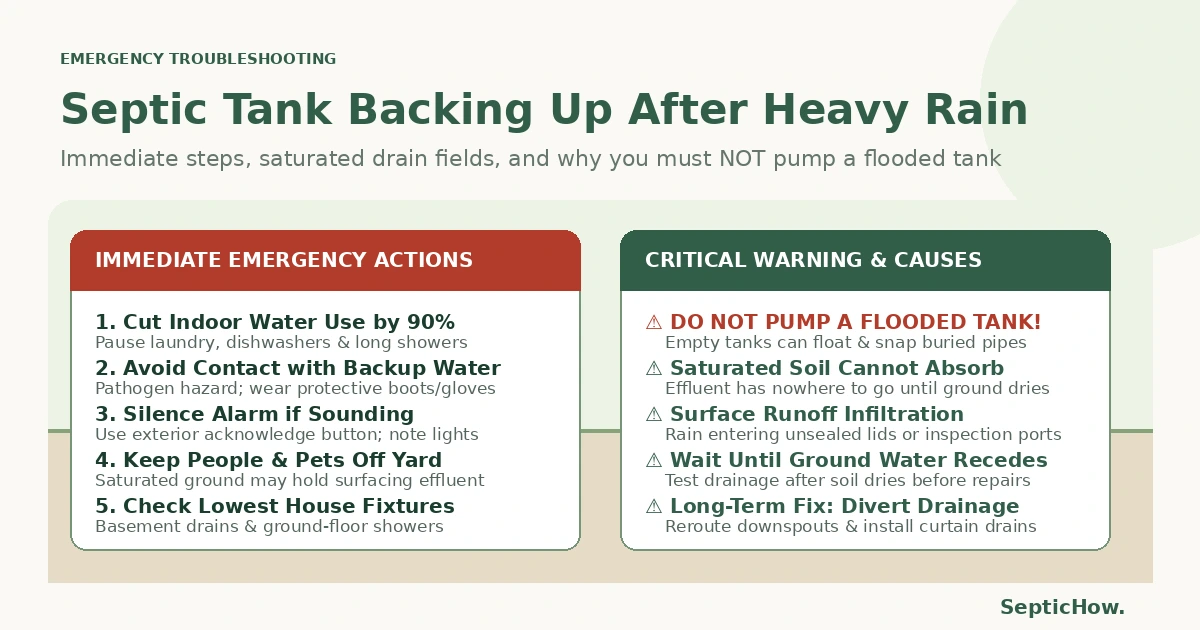
When heavy rain saturates the drain field, wastewater cannot percolate into the soil and backs up into household drains. Cut indoor water use immediately and do NOT pump your septic tank while the ground is flooded, as an empty tank can float and snap pipes.
Why does heavy rain cause septic tanks to back up?
A septic drain field relies on unsaturated soil pores to accept and biologically filter wastewater. During heavy rainfall, prolonged storms, or rapid snowmelt, the surrounding soil becomes completely saturated with rainwater.
Because saturated soil cannot absorb additional liquid, effluent has nowhere to go. It ponds inside the absorption trenches and backs up through the outlet pipe into the septic tank. Once the tank fills to capacity, wastewater backs up through the main sewer line into your home's lowest plumbing fixtures (basement floor drains, utility sinks, and ground-floor toilets).
Additionally, rainwater can flood into the tank directly if access riser lids are unsealed, inspection port caps are cracked, or roof downspouts discharge near the tank.
Immediate emergency actions: What to do right now
If your drains are sluggish or sewage is backing up during or immediately after a storm, take these immediate actions:
- Reduce household water use by 90%: Immediately stop running laundry machines and dishwashers. Take quick sponge baths and avoid running faucets.
- Silence audible alarms: If your pump control box is sounding, press the external silence button to mute the horn while keeping the red warning light active.
- Avoid direct contact with wastewater: Raw sewage contains dangerous pathogens and bacteria. Wear waterproof rubber boots and heavy gloves if walking in contaminated areas.
- Keep people and pets off the drain field: Walking on waterlogged soil compacts the earth and pushes water into surfacing pools.
- Inspect the lowest house fixtures: Check basement floor drains and lower showers; plug them if safe to prevent rising backups.
CRITICAL WARNING: Why you must NOT pump a flooded septic tank
Many homeowners instinctively call an emergency pumper to pump out their tank during a flood. However, the EPA, state environmental protection departments, and university cooperative extensions explicitly warn:
DO NOT pump your septic tank while the ground surrounding the system is flooded or heavily saturated.
Here is why: an empty septic tank buried in water-saturated soil acts like a hollow boat hull. Enormous hydrostatic groundwater pressure pushes upward against the tank. If the weight of the wastewater is pumped out, the tank can literally pop or float right out of the ground, shearing inlet and outlet PVC pipes and causing catastrophic structural damage costing $10,000+ to repair.
Furthermore, pumping a submerged tank draws waterlogged mud, silt, and sand backwards from the drain field into the tank, permanently clogging gravel trenches. Wait until floodwaters recede and ground soil dries before scheduling service.
Is your drain field failing permanently or just saturated?
Once the storm passes and sunny weather returns, monitor your plumbing over 3 to 7 dry days as the local water table recedes.
If your toilets, showers, and sinks return to normal drainage once the yard dries out, your system experienced temporary weather-induced hydraulic saturation. However, if slow drains, gurgling plumbing, and foul sewage odors persist after the ground is thoroughly dry, your drain field has likely suffered permanent biomat clogging or structural compaction and requires a professional evaluation.
Long-term fixes to prevent rain backups
To protect your septic system from future heavy storms, implement these property drainage improvements:
• Reroute roof gutter downspouts: Extend downspouts so they discharge at least 15 to 20 feet away from both the septic tank and the drain field.
• Regrade yard slopes: Ensure the surface topography slopes away from the absorption field so stormwater runoff does not pool over trenches.
• Install curtain drains (French drains): A shallow gravel-and-pipe curtain drain installed upslope of the drain field intercepts subsurface stormwater before it can saturate your absorption trenches.
• Install watertight riser gaskets: Seal tank access lids with watertight rubber gaskets to prevent stormwater from entering the tank.
Frequently asked questions
Can heavy rain ruin a septic drain field?
Temporary rain saturation will not ruin a healthy drain field once the water table recedes. However, driving heavy vehicles over waterlogged soil or pumping a flooded tank can cause permanent structural destruction.
Why does my toilet gurgle only when it rains?
Rainwater saturating your drain field prevents wastewater from displacing air freely in the pipes, forcing trapped air backwards through your toilet traps and causing audible gurgling.
How long after heavy rain does a septic system take to recover?
Depending on your soil composition and the severity of the storm, permeable sandy soil typically recovers within 24 to 48 hours, while dense clay or silt soil may take 4 to 7 days to dry out.
Sources you can check
EPA — How to care for your septic system ↗
Maintenance and household water use · Checked 2026-10-20
EPA — Resolving septic system malfunctions ↗
Warning signs and professional assistance · Checked 2026-10-20
Clemson Extension — Be Septic Safe: Unique Situations (HGIC 1898) ↗
Heavy rain, saturated drain fields, and flooded tank safety · Checked 2026-10-20