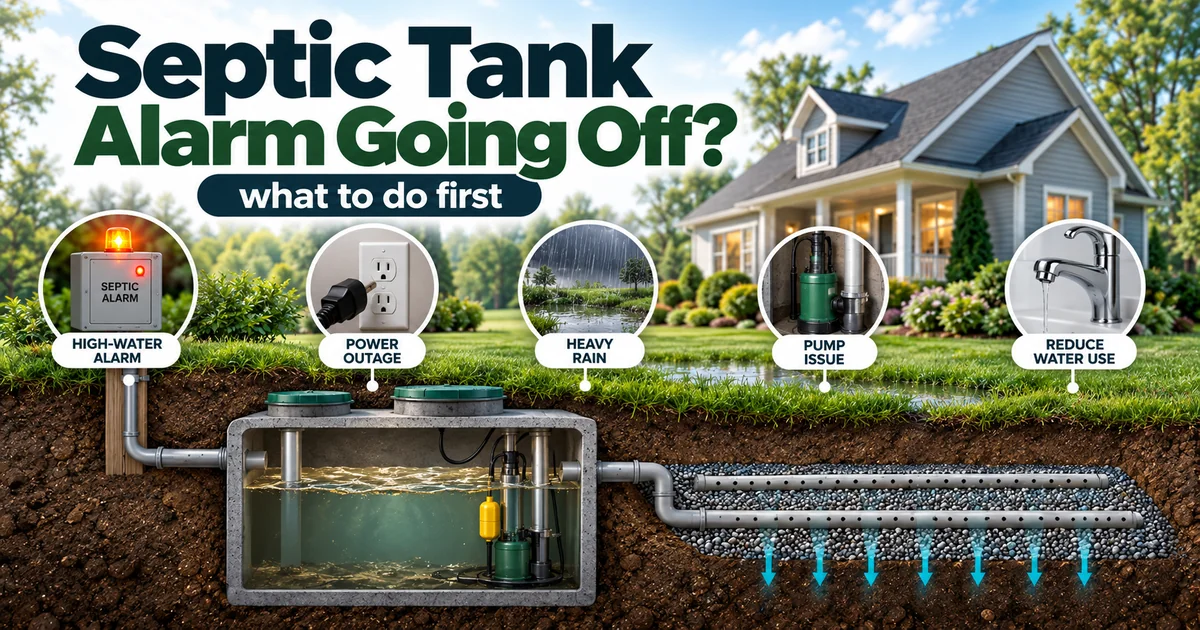
A septic high-water alarm can indicate that wastewater is not moving as expected. Reduce household water use, note the alarm light or message, and contact the system's service provider. Do not bypass controls, open electrical panels or enter the tank.
What to do when your septic tank alarm goes off
Reduce laundry, long showers and other unnecessary water use. Identify whether there is wastewater backing up or surfacing; if there is, avoid contact and arrange urgent service.
Look at any external indicator or user-facing display without opening electrical equipment. Follow your equipment manual for safe acknowledgement procedures and record whether the alarm returns.
Why does a septic high-water alarm sound?
Depending on the system, possible causes include a failed pump, float switch, electrical supply, control malfunction, blocked line or unusually high inflow. Rainwater or groundwater entering the system can also contribute.
Only equipment inspection can determine which condition triggered the alarm. A silent buzzer does not prove the system has recovered.
| What you notice | What to report |
|---|---|
| Alarm after heavy rain | Rain duration, pooling and current water use |
| Alarm after power outage | When power returned and alarm status |
| Alarm with slow drains | Which fixtures are affected |
| Alarm returns after reset | How long before it returned |
Septic alarm going off after heavy rain
A saturated area or unwanted groundwater entry can interfere with some systems. Reduce water use and contact the service provider, especially if the alarm persists or wastewater is surfacing.
Do not pump a tank during flood conditions without expert advice; high groundwater can create additional hazards.
Should you reset a septic tank alarm?
You can follow the manufacturer’s user instructions for acknowledging the audible alarm if they permit it. Do not disable the alarm, force a pump to run, alter wiring or assume that pressing silence corrects the cause.
If the light or message remains, or the alarm sounds again, report it to a qualified service provider.
When should you call a septic professional?
Contact your service provider promptly for a persistent alarm, recurring high-water warning, poor drainage or signs of sewage. Explain the system type, indicator and the timeline.
If sewage is backing up into living spaces or surfacing outdoors, limit use and keep people away from exposure while arranging urgent help.
What to do after rain or a power failure
An electrically powered system may stop moving wastewater during an outage. Heavy rain or groundwater entering the system can also contribute to a high-level warning. Reduce household water use and record whether the alarm started after the storm, outage or high water use.
Follow only the safe user steps in your equipment manual. Silencing the buzzer does not fix the underlying problem. Never bypass the alarm, open electrical panels or enter the tank. If the alarm persists or sewage backs up, contact a qualified service provider promptly.
Alarm types and why they differ
A high-water alert usually means a level sensor detected an unexpected condition, but equipment may also signal pump, aeration or control issues. What lights and buzzers mean varies by manufacturer. A system with multiple chambers or treatment stages may have more than one alert.
Use the equipment model or paperwork to identify the correct instructions. Do not assume advice for one alarm applies to a different panel. Contact the servicing contractor if the indicator is unfamiliar.
Can you keep using water during an alarm?
Minimize water use until the reason is understood. Avoid running multiple laundry loads, long showers or other heavy-water tasks. If wastewater is backing up or surfacing, stop unnecessary wastewater generation and seek urgent professional help.
The safe amount of use depends on the system and fault; an online article cannot determine your available reserve capacity. Ask the servicing company for specific guidance instead of relying on an arbitrary number of hours.
Preventing recurring septic alarms
Keep the service contract and system manual available, check visible indicators according to manufacturer guidance and record past alarms with dates and weather conditions. Have qualified technicians maintain pumps, floats and controls as recommended.
Do not obstruct tank access or allow roof drainage to enter system openings. If storms repeatedly trigger the same warning, request investigation of unwanted inflow and field conditions rather than repeatedly silencing the alarm.
Frequently asked questions
Can I use the toilet if my septic alarm is on?
Minimize wastewater use until you have guidance from the service provider; urgency increases if drains are backing up or wastewater is surfacing.
Does a septic alarm mean the tank needs pumping?
Not always. It may indicate pump, float, power, flow or inflow issues requiring diagnosis.
Why does the alarm keep beeping after I silence it?
Silencing a buzzer often does not resolve a high-water condition. Follow the manual and arrange service if it persists or returns.
Sources you can check
EPA — Types of septic systems ↗
Conventional and alternative systems · Checked 2026-10-05
EPA — How to care for your septic system ↗
Maintenance and household water use · Checked 2026-10-04
EPA — Resolving septic system malfunctions ↗
Warning signs and professional assistance · Checked 2026-10-04